Residential Soundproofing Solutions

Creating Quieter Homes

Noise at home has become a growing problem across Australia. Urban density is up, traffic volumes keep rising, and windows and walls that seemed fine five years ago suddenly feel paper-thin. If you’re waking up to trucks at 5am, lying awake while the neighbours watch television, or struggling to concentrate because of what’s happening outside your window, it’s not in your head.

Soundblock Solutions has been fixing residential noise problems for over twenty five years. In that time we’ve worked on everything from single-room window treatments to full acoustic rebuilds of multi-storey homes. What we’ve learned is that most noise problems have a real solution, and that getting to the right one requires actually understanding where the sound is coming from and how it’s travelling through the building.

This page covers the main areas of a typical home we treat, the products and methods we use, and how to know which approach fits your situation.

How Soundproofing Actually Works

There are two types of noise transmission in a home, and they require different solutions.

Airborne noise

Sound that travels through air and through building elements: traffic, voices, music, TV. The performance measure for airborne noise is the STC (Sound Transmission Class) or Rw (Weighted Sound Reduction Index) rating. A standard single-glazed window might sit at STC 27. A quality secondary glazing installation can push that to STC 40-45. For reference, an increase of 10 STC points roughly halves the perceived noise.

Impact noise

Sound generated by physical contact with the building itself: footsteps on a floor above, a chair being dragged, something dropped. Impact noise travels through the structure, not the air, which is why it’s harder to stop and needs different treatment. Resilient channel ceiling systems, acoustic underlays, and floating floor assemblies address this category.

Soundproofing Windows

Reduce Noise Without Touching Your Existing Frames

Windows are almost always the weakest point acoustically. Even double-glazed windows, which perform well thermally, often disappoint on noise because the air gap is too small to do much for sound.

We don’t replace your existing windows. We add to them.

Magnetic Secondary Glazing

Our magnetic panel system is made to the exact dimensions of your window. A steel channel is fixed to the existing frame, and the acoustic panel bonds to it magnetically, creating an airtight seal with no rattling. You can pull the panel off in seconds for ventilation or cleaning. The air gap between the original glazing and the new panel is what does the acoustic work, and it’s significantly more effective than standard double glazing. Expect STC improvements in the range of 10-15 points, which translates to a 50-70% reduction in perceived traffic noise for most clients.

Soundout Secondary Sliding System

For larger openings, high-use areas, or situations where the window needs to stay operable, the Soundout sliding system is a better fit. It runs on a heavy-duty aluminium track, operates smoothly, and delivers commercial-grade acoustic performance. Common applications include main bedroom windows on busy roads and living areas in apartment buildings.

Both systems are suitable for rental properties, heritage buildings, and situations where replacing windows is not an option. Custom manufacture means they work with almost any existing window shape or size.


Soundproofing Doors

Most Sound Leaks Through the Gaps, Not the Panel

A door with gaps around its perimeter or at the base is essentially an open hole for sound. Even a well-constructed door underperforms if the seals are inadequate. Standard hollow-core interior doors typically sit around STC 20-25, which is not much of a barrier.

Acoustic Solid Core Timber Doors

For bedrooms, home offices, or any room where you need real separation, we replace the existing door with an acoustic solid-core timber door. This comes fitted with perimeter seals on all four sides and a drop-down automatic door seal at the base, which lowers itself when the door closes and lifts when it opens. The combined effect of mass and sealing makes a substantial difference to both privacy and noise reduction.

Secondary Sliding Door System

Replacing a sliding door is often impractical. Our secondary sliding system installs internally in front of your current sliding door, adding a second barrier with an air gap between them. Performance is comparable to a full door replacement at significantly lower disruption and cost.

Seal Upgrades

In some cases the door itself is adequate and the problem is purely the sealing. We supply and install acoustic perimeter seals, drop seals, and threshold strips that close the gaps responsible for most of the leakage. This is often the most cost-effective first step.

Soundproofing Walls

Party Walls, Shared Walls, and Thin Internal Walls

Wall treatment comes up in two main scenarios: neighbours through a shared wall, and noise travelling between rooms inside the home.

A standard brick veneer wall might achieve STC 40-42. That means conversations on the other side are audible, though not fully intelligible. To get to the point where you genuinely can’t hear next door, you’re looking at STC 55 and above. The gap between those numbers involves adding mass, decoupling, and absorption.

Our residential wall treatments draw on several methods depending on what’s practical in the space:

  • Acoustic insulation batts packed into the wall cavity to absorb sound energy
  • Resilient channel systems that mechanically decouple the plasterboard from the structure, breaking the transmission path for both airborne and impact noise
  • Install acoustic barrierboard with higher mass-to-thickness ratios than standard board
  • Mass loaded vinyl where cavity access is limited

We assess the wall before recommending an approach, because the right fix depends heavily on the existing construction.

Soundproofing Ceilings

Dealing with Footsteps and Impact Noise from Above

Impact noise coming through a ceiling is one of the most consistent complaints we get. The problem is structural: every footstep on the floor above sends a vibration through the concrete or timber frame and re-radiates it into the room below. Treating the ceiling from below without addressing that structural path only gets you so far.

The most effective ceiling treatments work on both the airborne and impact components:

  • Resilient channel systems decoupled from the floor structure above, so the ceiling lining does not transmit vibrations directly
  • Acoustic insulation within the ceiling void to absorb airborne sound
  • Install acoustic barrierboard onto the ceiling to create a secondary ceiling
  • Where access to the floor above is available (owner occupier with multiple levels, or a cooperative upstairs neighbour), acoustic underlay installed on that floor dramatically reduces impact transmission and often outperforms ceiling-only treatment

We’ll be upfront about what’s achievable from below versus what requires working on both sides.

Soundproofing Floors

Reducing Noise Going Down, Not Just Coming Up

Hard flooring looks great aesthetically but is terrible acoustically. Timber, tile, laminate, and polished concrete all transmit footfall to the floor below with very little attenuation. If you’ve put in new timber flooring and suddenly have an issue with downstairs residents, this is almost certainly why.

Our floor treatment options:

  • High-performance acoustic underlays installed under floating floors: timber, laminate, or vinyl plank
  • Floating floor systems using resilient mounts to isolate the floor surface from the subfloor structurally
  • Acoustic matting for tiled areas including bathrooms

Properly treated floors can also reduce echo in the room itself, which is a secondary benefit most clients notice immediately.

Bedroom Soundproofing

Getting Consistent Sleep in a Noisy Environment

Sleep disruption from environmental noise is a documented health issue, not just an inconvenience. Research consistently links traffic noise exposure at night with elevated cortisol levels, increased cardiovascular risk, and reduced sleep quality even when people don’t consciously wake up.

A bedroom treatment plan starts with working out what the dominant noise source is and how it’s entering the room. Traffic from outside is almost always coming through the window. Noise from an upstairs neighbour is coming through the ceiling. Noise from inside the home is typically through the door or walls.

We combine treatments across all relevant surfaces based on where the noise is actually entering. Most clients see a significant improvement in sleep quality after installation, particularly where traffic noise has been the main issue.

Home Theatre Soundproofing

Real Cinema Levels Without Complaints

Home theatres are acoustically demanding in both directions. Low-frequency bass from subwoofers passes through almost any conventional wall or floor/ceiling assembly, which means your neighbours hear the boom even when they can’t hear the dialogue. And the internal acoustics of most rooms add echo that reduce the quality of what you’re actually hearing.

We address both sides. The external containment work uses high-mass assemblies with mechanical decoupling to isolate bass frequencies, which are the hardest to stop. The internal acoustic work uses absorption to create a room that sounds as good as it can rather than competing with itself.

Home Office Soundproofing

Acoustics That Work for Video Calls and Concentration

Working from home created acoustic demands that residential buildings were not built to handle. A bedroom converted to an office, or a study next to the living area, rarely has the acoustic separation you’d have in a commercial building.

There are two problems to solve simultaneously: keeping external noise out, and controlling the internal acoustics of the room so your voice sounds clear on calls rather than reverberant and distant.

  • External noise reduction: window secondary glazing, acoustic door seals, wall treatment as needed
  • Internal acoustics: wall and ceiling absorption panels to reduce the reverb time of the room itself
  • Privacy: keeping your conversations from being audible in adjacent rooms

Home offices are one of our more common residential jobs now, and the difference between a treated and untreated space on a video call is immediately obvious to everyone on the other end.

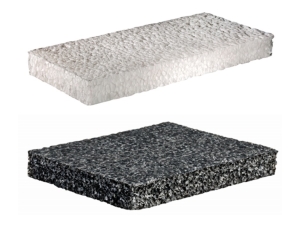
Stratocell Whisper Acoustic Foam

Stratocell Whisper is one of the better acoustic materials we install and it’s worth understanding what sets it apart.

Most acoustic foam is open-cell polyester or fibrous: it absorbs sound reasonably well in a room but does very little to stop sound passing through it. Stratocell Whisper is a closed-cell polyethylene foam with an NRC (Noise Reduction Coefficient) of 1.0 and a Transmission Loss of 13.8 dB, which is exceptional for a foam product.

It’s also moisture-resistant, UV-stable, fire-rated (Group 1 for indoor use), and considerably more durable than traditional standard acoustic products. We use it across residential, commercial, and industrial projects wherever those properties are required.

White 50mm Stratocell Whisper & Black 50mm Stratocell Whisper

Why Soundblock Solutions

  • Twenty five years of residential acoustic work across Australia

    We have completed thousands of residential projects. That means we’ve encountered the structural oddities, the heritage constraints, and the tight budgets that come with real-world work.coustic expertise by homeowners, businesses, and industries across Australia

  • Products that do what they say

    We supply and install products we’ve tested and stand behind, including our own magnetic window system and the Soundout sliding range. We don’t recommend a product because it’s available; we recommend it because it fits the problem.

  • Honest assessment before we quote

    We’ll give you a clear picture of what’s achievable and what the trade-offs are, and you can make your decision from there.

Common Questions

It varies significantly based on what’s being treated and which product is required. A window secondary glazing installation for one room starts from a few hundred dollars. A comprehensive bedroom treatment including windows, door, and wall work will be several thousand. We provide fixed quotes after an inspection, with no obligation.

With the right treatment applied to the right problem, yes. A secondary glazing installation on a bedroom window facing a main road typically reduces traffic noise to the point where it’s no longer sleep-disrupting. The caveat is that poorly matched solutions make less difference, which is why we assess the problem first.

Not always. Secondary window glazing, door seals, and many wall treatments are minimally invasive. Some jobs do require opening walls or ceilings, but we only recommend that where the result justifies it. We’ll always tell you in advance what the installation involves.

Both measure how much a building element reduces airborne sound. STC is the Australian and North American standard; Rw is the international equivalent. A higher number means better performance. Standard walls sit around STC 40-45. For genuine privacy between rooms you want STC 50 and above. We can explain what rating is achievable in your specific situation.

Our head office and warehouse is based in Sydney, NSW and have consultants nationally.

Book a Home Assessment

If noise is affecting how you live at home, call us.
We’ll come to the property, look at what’s happening, and give you a straight assessment of your options and costs. 

  • Residential-Solutions