Industrial Soundproofing Solutions

Noise Control for Manufacturing, Marine and Heavy Industry

Industrial noise is a more complex problem than residential or commercial noise. The sources are louder, the environments are harsher, the compliance stakes are higher, and the solutions need to survive conditions that would destroy standard acoustic materials quickly.

Soundblock Solutions has been working on industrial noise problems across Australia for over twenty five years. Our work spans manufacturing plants, processing facilities, construction sites, marine vessels, and infrastructure projects. We understand the operational constraints that come with this work: the need for solutions that don’t impede access or ventilation, that survive the physical environment they’re placed in, and that can be documented to satisfy regulators.

The Compliance and Safety Picture

Two regulatory frameworks drive most industrial acoustic work in Australia.

The first is workplace noise exposure. Under the Work Health and Safety Regulations, the exposure standard is an average of 85 dB(A) over an eight-hour shift, with a peak limit of 140 dB(C). Where exposure exceeds these levels, employers must reduce it through engineering controls where that’s reasonably practicable. Hearing protection is a last resort, not a substitute for engineering noise control. Regulators look at whether an employer has genuinely pursued engineering solutions before accepting reliance on PPE.

The second is environmental noise. State EPA regulations and local planning approvals set limits on noise emitted to adjacent properties. These limits apply 24 hours a day, vary by time period, and are measured at the receiver, not the source. Exceeding them can result in enforcement action, fines, and in some cases conditions on the operating licence itself. For businesses near residential zones, even modest machinery noise can become a compliance issue

Stratocell Whisper

Industrial-Grade Acoustic Foam That Actually Performs

Standard acoustic products absorb sound within a space but does very little to stop it travelling through the material. Stratocell Whisper is different. It’s a closed-cell polyethylene foam with an NRC (Noise Reduction Coefficient) of 1.0 and a Transmission Loss of 13.8 dB. Most acoustic products only have an NRC rating because their Transmission Loss is negligible. The combination of both in a single product is what makes Stratocell Whisper genuinely useful in industrial applications.

The durability properties matter just as much in industry:

  • UV, moisture, and humidity resistant: performs reliably in outdoor enclosures, engine rooms, and high-humidity processing environments
  • Resistant to compression, abrasion, and thermal cycling: stays effective after years of industrial use, unlike open-cell foams that degrade and lose performance
  • Group 1 Fire Rating for indoor applications: meets Australian fire safety requirements
  • Lightweight construction: practical for installation in confined spaces, on vertical and overhead surfaces, and in applications where weight is a constraint

We use Stratocell Whisper across industrial, marine, and commercial projects wherever the combination of acoustic performance and environmental durability is required.

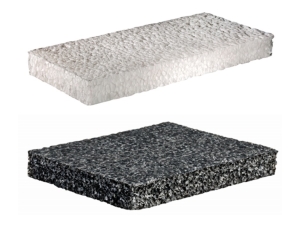
White 50mm Stratocell Whisper & Black 50mm Stratocell Whisper

Industrial Applications

Manufacturing and Processing

Manufacturing environments present some of the most technically demanding acoustic problems: high source noise levels, continuous operation, access requirements for maintenance and production, and physical conditions that rule out many standard materials.

Our manufacturing noise control work includes:

  • Machine enclosures custom-built to allow operational access, with removable panels, viewing windows, cable penetrations, and ventilation provisions, while containing source noise
  • Acoustic barriers creating quieter zones within larger production areas for control stations, administration desks, and rest areas
  • Ceiling absorption treatment in large production halls to reduce reverberant noise buildup that inflates worker exposure levels
  • Personnel barriers protecting workers at fixed stations from nearby machinery
  • High-density barrier systems for plant room walls and equipment enclosures
  • Vibration isolation mounts and platforms for machinery that generates structure-borne noise

Machine enclosures in particular are more complex than they look. Access requirements, heat dissipation, and the need to maintain production throughput all affect the design. We’ve built enclosures for everything from press equipment to compressors to printing machinery, and the brief is always the same: reduce the noise significantly without making the machine harder to use.

Construction and Infrastructure

Construction sites have specific temporary noise requirements for both worker protection and community impact management. Stratocell Whisper installed onto hoarding and barrier systems will significantly reduce the perceived noise ,and provide specification support for construction noise management plans where these are required by council consent conditions.

Energy and Utilities

Pumping stations, compressor rooms, substations, and power generation equipment generate noise that can be particularly problematic because of its tonal character. A steady hum or tone carries further and is more annoying at a given dB level than broadband noise. Our energy sector solutions focus on enclosure design for continuously-running equipment, where maintaining access and managing heat build-up sit alongside noise reduction as primary constraints.

Marine Soundproofing

Conditions That Eliminate Most Standard Materials

Marine environments are hostile to acoustic materials. Moisture, salt air, bilge exposure, temperature extremes, and physical contact from crew all eliminate standard products quickly. Stratocell Whisper’s closed-cell construction and moisture resistance make it one of the few materials suited to marine acoustic work without rapid degradation.

Our marine soundproofing work covers:

  • Engine bay acoustic lining systems to reduce noise levels and prevent transmission to crew and passenger areas
  • Generator enclosures and mechanical space treatments
  • Marina and dockside acoustic applications

Environmental Noise Control and Acoustic Consulting

Some industrial noise problems require more than products and installation. Complex compliance matters, development approval conditions, and situations involving measured exceedances of EPA limits need acoustic analysis and documented solutions.

In these situations we recommend acoustic engineering consultants to work alongside our installation work:

  • Noise impact assessments for development applications and operating licence renewals
  • Engineering noise control recommendations documented for regulatory purposes
  • Noise monitoring and measurement programs to demonstrate compliance
  • Design specifications for new plant and equipment prior to procurement

We work alongside qualified acoustic consultants on larger projects where independent measurement sign-off is required. Our role is typically to supply and install the acoustic materials. Where independent verification is needed, we can refer to an acoustic engineering consultant.

Why Industrial Clients Use Soundblock Solutions

  • Products that survive the environment

    We’ve seen what happens when inferior acoustic products are installed in industrial settings without considering durability. They compress, absorb moisture, degrade, and stop performing over a period of time. We specify materials, including Stratocell Whisper, that are rated for the conditions they’ll face.

  • Practical design, not just acoustic theory

    A machine enclosure that blocks noise perfectly but makes the machine unusable hasn’t solved the problem. Our designs account for operational access, ventilation, maintenance requirements, and production constraints from the start.

  • Documentation for compliance

    Our product specifications include NRC values, Transmission Loss data, and STC ratings. When a certifier asks what noise reduction has been achieved, you have the paperwork to back it up.llenges before recommending solutions.

Frequently Asked Questions

Under the Model Work Health and Safety Regulations, the noise exposure standard is 85 dB(A) averaged over an eight-hour day and 140 dB(C) peak. Employers must take all reasonably practicable steps to reduce exposure below these levels, with engineering controls required before relying on hearing protection.

Standard open-cell acoustic foam reduces echo and reverberation within a space but has negligible Transmission Loss, meaning it doesn’t stop noise passing through it. Stratocell Whisper is a closed-cell foam with an NRC up to 1.0 and a Transmission Loss of 13.8 dB, combined with UV, moisture, and humidity resistance that standard product lacks completely. In industrial and marine settings, this difference matters significantly.

Yes. If your facility has received a compliance notice or is managing ongoing complaints, we can assess the situation and recommend a proven solution. Proactive engineering controls tend to be viewed favourably by regulators compared with continued reliance on complaints management.

We can provide acoustic analysis and engineering noise control recommendations for most industrial situations. For projects requiring independent acoustic measurement and sign-off for regulatory purposes, we work alongside acoustic engineering consultants.

For large industrial projects, we can travel to regional and remote sites. Contact us to discuss the project location and scope.

Get an Industrial Acoustic Assessment

If you have a noise compliance issue, a workplace exposure problem, or a community noise challenge, get in touch.
We’ll assess the situation and give you a clear view of your options, the likely noise reductions achievable, and what it will cost.