
Restaurant Acoustics: How to Reduce Noise and Improve Customer Experience
Walk into any popular restaurant during peak hours and you’ll likely experience that overwhelming wall of sound that makes conversation difficult, orders hard to hear, and the entire dining experience exhausting rather than enjoyable.
Poor restaurant acoustics have become so common that many diners simply accept them as part of modern dining out. But it doesn’t have to be this way.
Excessive noise in restaurants isn’t just an annoyance – it’s a business problem that directly impacts customer satisfaction, online reviews, repeat visits, and ultimately, your bottom line.
This comprehensive guide explores why restaurant acoustics matter, the science behind the noise, and practical solutions that improve customer experience without compromising your venue’s design aesthetic.
Why Restaurant Acoustics Matter for Customer Satisfaction and Reviews
The dining experience extends far beyond food quality. Ambience, comfort, and the ability to have conversations are fundamental to customer satisfaction. Research consistently shows that noise is one of the top complaints in restaurant reviews, often ranking alongside food quality and service.
The Review Impact: A quick scan of restaurant reviews on Google, TripAdvisor, and other Australian dining platforms reveals countless comments like “food was great but too loud to have a conversation,” “had to shout to be heard,” or “left with a headache.”
Research shows that noise complaints consistently rank as one of the top issues mentioned in restaurant reviews globally, and this trend is equally evident in Australian venues. These reviews directly influence potential customers’ decisions, with many specifically searching for “quiet restaurants” or avoiding venues described as too loud.
Customer Demographics: While some younger diners may tolerate or even prefer energetic, loud environments, broad customer appeal requires acoustic comfort. Older diners, business lunch crowds, families with young children, and couples seeking intimate dinners all value the ability to converse comfortably. As Australia’s population ages, acoustic comfort becomes increasingly critical – older diners represent significant spending power and are particularly sensitive to noise. By addressing acoustics, you expand your potential customer base.
Length of Stay and Spending: Comfortable acoustics encourage guests to linger, order additional courses, and enjoy after-dinner drinks. In contrast, excessive noise drives customers out more quickly, reducing per-table revenue. Studies have shown that customers in quieter environments tend to spend more time and money than those in uncomfortably loud spaces.
Staff Communication: It’s not just customers who suffer from poor acoustics. Staff members struggle to hear orders, communicate with the kitchen, and coordinate service, leading to mistakes, inefficiency, and higher stress levels.
Competitive Advantage: As awareness of acoustic comfort grows, restaurants with good sound environments gain a genuine competitive edge. “Great food and you can actually have a conversation” is powerful word-of-mouth marketing.
The Science Behind Restaurant Noise Problems
Understanding why restaurants become so loud helps in developing effective solutions.
The Cocktail Party Effect: As background noise increases, people naturally raise their voices to be heard. This creates additional noise, causing others to speak even louder. This feedback loop, known as the Lombard Effect, can quickly push sound levels from comfortable to overwhelming. Research shows this phenomenon isn’t just seen in human environments – even birds adjust their singing frequency in noisy urban surroundings to be heard.
Hard Surface Proliferation: Modern restaurant design often features hard, reflective surfaces – polished concrete floors, exposed brick walls, glass windows, hard timber tables, and metal fixtures. While aesthetically appealing and easy to clean, these surfaces reflect sound rather than absorbing it, causing sound waves to bounce around the space and amplify noise levels.
Reverberation Time: This measures how long sound persists in a space after the source stops. Long reverberation times create a muddy, indistinct sound environment where individual conversations blur together into an unintelligible roar. Ideal reverberation time for restaurants is typically between 0.8 and 1.2 seconds, but many venues measure 2-3 seconds or more.
Open Kitchen Designs: While visually engaging and trendy, open kitchens introduce operational noise – clattering dishes, kitchen equipment, staff communication – directly into the dining area without sound barriers.
High Ceilings: Lofty ceilings create a sense of space but also increase volume and reverberation. Sound travels further and reflects more before being absorbed, intensifying the problem.
Density of Seating: More tables packed into a space means more simultaneous conversations, more chair movement, and more overall noise generation. Tight seating also reduces the distance between tables, making it harder for diners to focus on their own conversation amid surrounding noise.
Common Acoustic Issues in Dining Spaces
Different restaurant layouts present unique acoustic challenges:
The Industrial Chic Venue
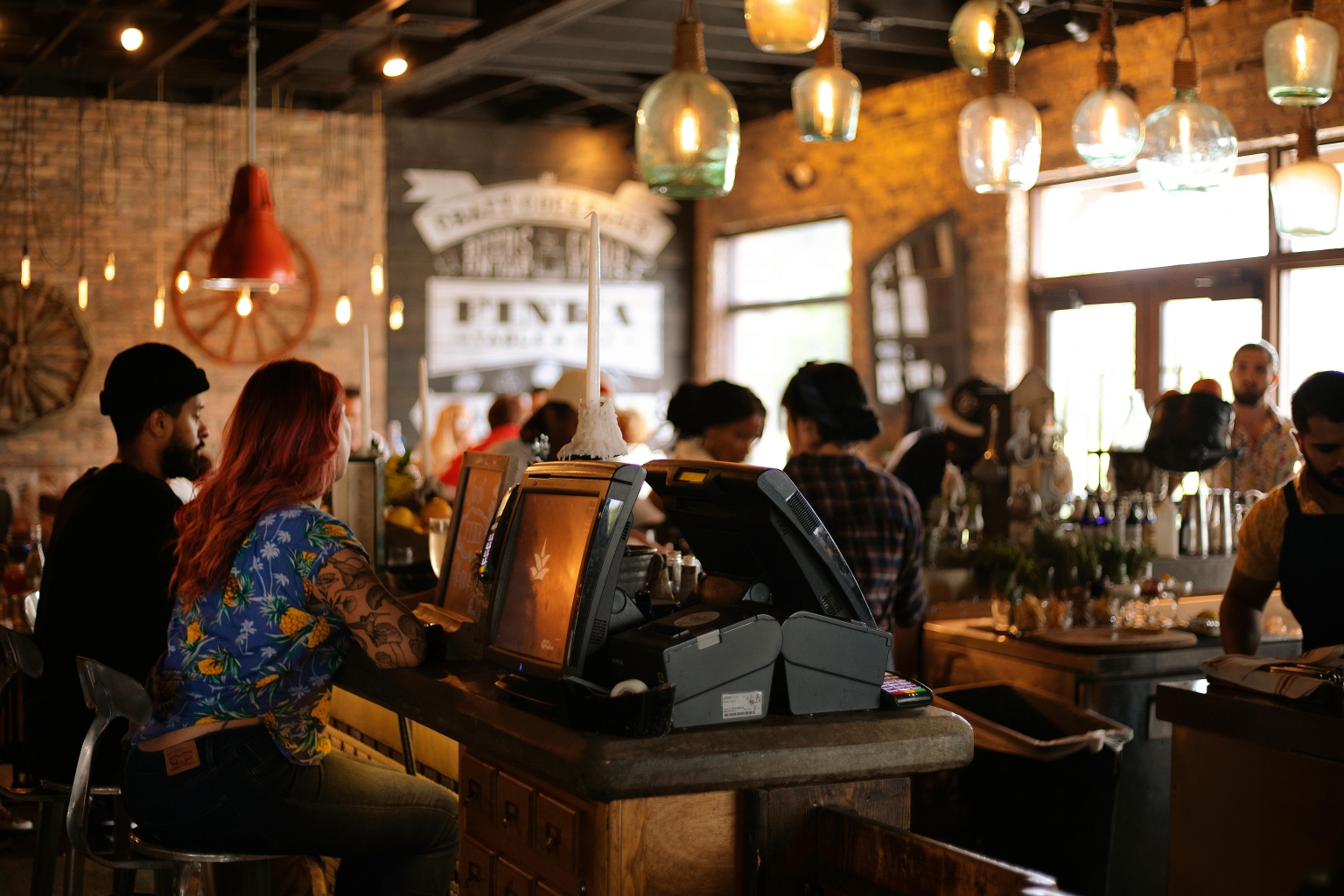
Converted warehouses and industrial spaces with exposed brick, concrete, high ceilings, and minimal soft surfaces create severe acoustic challenges. These spaces look stunning but can be acoustically brutal without treatment.
The Bustling Bistro
Moderate ceiling heights with hard floors, minimal soft furnishings, and close table spacing create the classic “loud restaurant” problem where conversation requires raised voices, contributing to the noise cycle.
The Fine Dining Establishment
Even upscale venues aren’t immune. Large dining rooms with marble floors, glass features, and minimal acoustic treatment can undermine the sophisticated experience you’re trying to create.
The Café with Hard Surfaces
Coffee machines, blenders, hard floors, and hard walls create a challenging acoustic environment. The problem is particularly acute during busy periods when multiple conversations and equipment noise combine.
The Open-Plan Venue
Restaurants with bars, multiple dining areas, and open kitchens in one large space face the challenge of sound travelling freely throughout, making it difficult to create distinct acoustic zones.
Australian Work Health and Safety Regulations for Workplace Noise
Beyond customer comfort, restaurant owners have legal obligations regarding workplace noise levels under Australian Work Health and Safety legislation.
WHS Exposure Standards: Under the Model Work Health and Safety Regulations, which apply across most Australian jurisdictions, employers must ensure that workers are not exposed to noise levels exceeding:
- LAeq,8h of 85 dB(A) (the equivalent continuous A-weighted sound pressure level over an eight-hour working day)
- Peak noise level (LC,peak) of 140 dB(C)
These exposure standards apply to all workplaces, including hospitality venues.
Hospitality Industry Considerations: While restaurants rarely approach industrial noise levels, busy venues with poor acoustics can reach 75-85 decibels during peak service, particularly near open kitchens, bars, or where amplified music is played.
International studies and anecdotal evidence from Australian venues consistently show busy restaurants operating at 75-85 dBA – levels where conversation becomes difficult and prolonged exposure can impact hearing health.
Research by Flinders University has demonstrated that restaurant noise at these levels negatively affects food enjoyment, with diners reporting reduced taste perception and overall satisfaction.
Duty of Care: Under Australian WHS legislation, Persons Conducting a Business or Undertaking (PCBUs) must:
- Identify noise hazards in the workplace
- Assess risks to workers from noise exposure
- Implement control measures to eliminate or minimise risks
- Monitor the effectiveness of control measures
- Provide information, training, and instruction to workers
- Maintain records of risk assessments and control measures
Control Hierarchy: WHS regulations require employers to follow the hierarchy of controls, prioritising elimination of the hazard where possible, followed by substitution, engineering controls (such as acoustic treatment), administrative controls, and finally personal protective equipment.
Audiometric Testing: For workers regularly exposed to noise levels requiring hearing protection, employers may need to provide regular audiometric testing to monitor hearing health.
Practical Application: Addressing acoustic issues in your restaurant through proper design and acoustic treatments not only improves customer experience but also demonstrates compliance with WHS obligations, reduces risk of staff compensation claims, and creates a healthier, more productive work environment.
Acoustic Solutions That Don’t Compromise Design Aesthetics
The beauty of modern acoustic solutions is that they enhance rather than detract from your restaurant’s design. Gone are the days when acoustic treatment meant ugly foam panels or institutional-looking ceiling tiles.
Ceiling Treatments with Soundblock Solutions Acoustic Panels
Soundblock Solutions Acoustic Absorption Panels: Our premium acoustic panels are specifically designed for upper walls and ceilings in commercial environments. These panels provide exceptional sound absorption while complementing your venue’s aesthetic. Available in various designs, colours, and configurations, they can be:
- Installed as feature elements that enhance your design scheme
- Custom-configured to match your décor and branding
- Mounted on ceilings to address overhead sound reflection
- Positioned on upper walls to control sound at its source
- Arranged in patterns to create visual interest while maximising acoustic performance
Suspended Solutions: Soundblock acoustic baffles and cloud panels create dramatic visual statements while providing excellent sound absorption. They’re particularly effective in venues with high ceilings where wall treatments alone are insufficient.
Coverage and Placement: For optimal results, Soundblock acoustic panels should cover 25-40% of ceiling area in dining spaces, with additional panels on upper walls near high-noise sources like bars and open kitchens.
Wall Treatments
Upper Wall Applications: Soundblock acoustic panels mounted on upper walls (above typical wall artwork height) provide sound absorption without interfering with the dining space or wall décor at eye level.
Decorative Integration: Our panels can be specified in colours and finishes that integrate seamlessly with existing design elements, from contemporary minimalism to rustic warmth.
Acoustic Artwork: Custom-printed Soundblock panels featuring photography, abstract art, or your restaurant’s branding serve dual purposes—visual interest and sound absorption.
Timber Acoustic Features: Natural timber finishes with acoustic backing provide the warmth of wood while significantly reducing noise, working beautifully in various settings from casual to upscale.
Living Walls: Vertical gardens and preserved moss walls provide both visual appeal and modest acoustic benefits, though they work best when combined with purpose-built acoustic treatments like Soundblock panels.
Upholstered Features: Built-in banquette seating, upholstered wall panels, and fabric-covered partitions add texture and warmth while absorbing sound.
Floor Solutions
Area Rugs and Runners: Strategic placement of rugs in entryways and low-traffic areas reduces footstep noise and adds warmth. Choose commercial-grade materials suitable for restaurant environments.
Acoustic Underlay: When replacing flooring, acoustic underlay beneath timber or vinyl significantly reduces impact noise and vibration.
Carpet in Specific Zones: While full carpet isn’t practical in dining areas, carpeted zones in entryways, waiting areas, or quiet dining sections provide acoustic benefits.
Furniture and Fixtures
Upholstered Seating: Fabric-covered chairs and banquette seating absorb far more sound than hard timber or metal seating. The difference is substantial and immediately noticeable.
Table Treatments: Fabric table runners and quality tablecloths provide modest sound absorption and enhance the dining experience with tactile comfort.
Strategic Dividers: Floor-to-ceiling or partial dividers with acoustic properties can separate dining zones, reduce sight lines between tables, and control sound transmission. These range from elegant fabric screens to custom timber partitions.
Lighting Fixtures: Large fabric lampshades and felt-wrapped pendant lights provide both ambient lighting and sound absorption.
Specialised Solutions for Specific Challenges
Open Kitchen Barriers: Partial walls, hanging Soundblock acoustic panels, or glass screens with acoustic properties can reduce noise transmission from kitchens without completely closing off the visual connection.
Bar Area Treatments: Bars are often the noisiest areas in a venue. Overhead Soundblock acoustic baffles, acoustic panels on walls behind bars, and strategic sound-absorbing materials help contain bar noise.
Private Dining Rooms: Acoustic doors, wall treatments using Soundblock panels, and ceiling coverage ensure private dining spaces truly feel separate and intimate.
Maintenance and Cleaning of Acoustic Products in Food Service Environments
Restaurant environments present unique maintenance challenges for acoustic products. Proper specification and care ensure longevity, hygiene, and sustained acoustic performance:
Material Selection for Hospitality: Soundblock Solutions acoustic panels are specifically designed for commercial hospitality environments. Our products feature:
- Durable, commercial-grade fabrics with stain-resistant treatments
- Tight weave construction that resists dust accumulation
- Materials that maintain acoustic performance despite exposure to cooking odours and temperature variations
- Fire-rated components meeting Australian building standards
Regular Cleaning Protocols:
- Monthly maintenance: Vacuum Soundblock panels using a soft brush attachment to remove surface dust
- Spot cleaning: Address stains immediately using a damp cloth with mild, pH-neutral cleaner
- Annual deep clean: Schedule professional cleaning or use appropriate fabric cleaning methods
- Quarterly inspection: Check panels for damage, discolouration, or wear
Location-Specific Considerations:
- Ceiling installations: Soundblock panels mounted on ceilings accumulate less soiling and require less frequent cleaning than wall-mounted panels
- Near open kitchens: In areas adjacent to cooking zones, specify Soundblock panels with enhanced protective treatments or position panels further from direct cooking activity
- High-traffic zones: Panels near entryways or service stations may require more frequent maintenance
Hygiene Standards: All Soundblock acoustic panels meet food service hygiene requirements and can be cleaned using standard commercial cleaning products without compromising acoustic performance.
Long-Term Maintenance Planning:
- Budget for annual professional cleaning: $200-$800 depending on installation size
- Replacement cycle: Soundblock acoustic panels typically maintain performance and appearance for 7-15 years in restaurant environments
- Warranty coverage: Our products include comprehensive warranties covering manufacturing defects and performance specifications
Staff Training: Establish clear protocols for your team:
- Never use harsh chemicals, bleaches, or abrasive cleaners on acoustic panels
- Report damage or staining immediately for prompt attention
- Include acoustic panel inspection in regular venue maintenance checklists
- Document cleaning and maintenance activities
Professional Support: Soundblock Solutions provides detailed maintenance guidelines specific to your installation and can arrange professional cleaning services throughout Australia to ensure your acoustic treatment continues performing optimally.
ROI: How Better Acoustics Increase Repeat Customers
Investing in acoustic treatment with Soundblock Solutions delivers measurable returns through multiple channels:
Improved Reviews and Ratings: Restaurants that address acoustic issues see immediate improvement in online reviews. Positive mentions of comfortable noise levels attract customers specifically seeking pleasant dining environments. The elimination of “too loud” complaints from your reviews provides immediate competitive advantage.
Expanded Customer Demographics: Acoustic comfort opens your venue to customers who previously avoided it—older diners, business lunch crowds, families, and anyone seeking conversation-friendly dining. With nearly 30% of Australians experiencing some degree of hearing difficulty, accessible acoustic environments significantly expand your market.
Increased Spend Per Table: Comfortable customers linger longer, order additional courses, and don’t rush through meals. Research indicates this directly increases average spend per table by 15-25% in venues that have addressed acoustic problems.
Higher Staff Satisfaction and Retention: Comfortable working conditions reduce staff stress, fatigue, and turnover. Training costs decrease and service quality improves with experienced, satisfied staff. Reduced staff turnover alone can save restaurants $5,000-$15,000 per position annually.
Premium Positioning: Good acoustics support premium pricing. Customers willingly pay more for complete dining experiences that include acoustic comfort alongside excellent food and service.
Compliance Benefits: Addressing workplace noise demonstrates WHS compliance, reduces risk of staff compensation claims, and protects against potential regulatory enforcement actions.
Energy Efficiency: Many acoustic treatments, including Soundblock panels, provide modest thermal insulation benefits, potentially reducing heating and cooling costs.
Typical Investment Recovery: Most restaurants recover Soundblock acoustic treatment investments within 12-24 months through increased bookings, higher average spending, reduced staff turnover, and improved operational efficiency. The benefits continue indefinitely, with properly maintained acoustic treatments lasting 10-15 years or more.
Measurable Impact: Post-installation, restaurants typically report:
- 20-40% reduction in noise complaints in reviews
- 15-30% increase in midweek bookings (particularly business diners)
- 10-20% improvement in staff satisfaction scores
- Notable reduction in order errors and service mistakes
- Positive media coverage highlighting the comfortable environment
Customer Testimonials: Real Results from Australian Restaurants
Rather than hypothetical case studies, here’s what actual restaurant owners and diners are saying about venues that have addressed acoustic challenges:
Melbourne CBD Restaurant: “Finally a restaurant where you can hear yourself think! The food was excellent and the acoustics were perfect—we could actually have a conversation without shouting. Will definitely be back.” – Google Review
Sydney Inner West Venue: “Beautiful fit-out with great acoustics. It gets busy but never uncomfortably loud like so many other places. You can tell they’ve actually thought about the sound design, not just the look.” – TripAdvisor Review
Brisbane Riverside Restaurant: “What a difference proper acoustics make! This place used to be painfully loud. After their renovation with the ceiling treatments, it’s so much more comfortable. Same great food, but now you can actually enjoy it without leaving with a headache.” – Zomato Review
Perth Suburban Bistro: “Rare to find a busy restaurant where the noise level is actually comfortable. The acoustic panels on the ceiling are hardly noticeable but make such a difference. Perfect for business lunches.” – Google Review
Adelaide Hills Restaurant: “Stylish venue with surprisingly good acoustics considering the high ceilings. They’ve used acoustic treatments that blend beautifully with the design. You can actually hear your dinner companions!” – OpenTable Review
From a Restaurant Owner: “Installing Soundblock acoustic panels was one of the best business decisions we’ve made. Our customer feedback immediately improved, and we’ve seen a measurable increase in midweek bookings. Staff are happier too—they’re not shouting orders at each other all night. The panels look great and the difference in atmosphere is remarkable.” – Australian Restaurant Owner, Google Business Response
From Another Venue Manager: “We were sceptical about whether acoustic treatment would make a real difference, but the change was dramatic. Noise levels during busy service dropped noticeably, customers are lingering longer, and multiple reviews have specifically mentioned how comfortable the space is. Best investment we’ve made in the venue.” – Australian Venue Manager, Industry Forum
These authentic reviews reflect the real-world impact of proper acoustic treatment on customer experience and business performance.
Working with Your Designer and Acoustician
Acoustic design works best when integrated from the start, but Soundblock Solutions can also successfully retrofit existing venues:
New Venues: Involve acoustic specialists during the design phase. We can model the space, predict noise levels, and specify Soundblock acoustic treatments that integrate seamlessly with the design vision. This approach is far more cost-effective than retrofitting.
Renovations and Retrofits: An acoustic assessment identifies problems and solutions. Our consultants measure existing noise levels, calculate reverberation times, and recommend targeted Soundblock installations.
Collaboration: The best outcomes occur when acoustic consultants, interior designers, and architects work together. Acoustic needs become design opportunities rather than constraints. Soundblock panels are available in extensive design options to complement any aesthetic direction.
Realistic Expectations: Complete silence isn’t the goal in restaurants. You want controlled, comfortable ambient sound that allows conversation without strain. Too much acoustic treatment can make a space feel dead and uncomfortable. The goal is balance, and Soundblock Solutions specialists help you achieve optimal acoustic environments.
Staged Implementation: If budget is constrained, prioritise high-impact areas—ceilings first, then upper walls in noisiest zones. You can add Soundblock treatments progressively as budget allows, with each installation providing noticeable improvement.
DIY Assessment: Is Your Restaurant Too Loud?
Before investing in acoustic treatment, assess your current situation:
Simple Sound Level Measurement: Download a sound level meter app on your smartphone (they’re surprisingly accurate). Measure during:
- Quiet periods (baseline)
- Moderate busy periods
- Peak service
Ideal restaurant noise levels:
- Fine dining: 55-65 decibels
- Casual dining: 65-75 decibels
- Bars and energetic venues: 75-80 decibels
Anything consistently above 80 decibels is uncomfortably loud and likely damaging your business and potentially creating WHS compliance issues.
The Conversation Test: Can staff take orders without asking customers to repeat themselves? Can diners at a four-top all participate in conversation without shouting? If not, you have an acoustic problem.
Review Analysis: Search your online reviews for keywords like “loud,” “noisy,” “couldn’t hear,” “shouting,” or “too loud.” Multiple mentions indicate a significant problem affecting customer satisfaction.
Staff Feedback: Ask your team honestly—is the noise level stressful? Do they struggle to communicate? Do they experience fatigue or vocal strain from speaking over noise all shift? Their daily experience provides valuable insight.
Clap Test: A simple clap in an empty space reveals reverberation. In a well-treated space, the sound should decay quickly (under 1.5 seconds). If it echoes and persists, you need acoustic treatment.
Customer Behaviour Observation: Do customers leave quickly after meals? Do they seem uncomfortable or frequently ask staff to repeat information? These behaviours often indicate acoustic problems.
Budget Planning for Restaurant Acoustic Treatment
Costs vary significantly based on venue size, existing conditions, and solution sophistication:
Small Venue (Under 50 Seats) – $3,000-$8,000: Soundblock acoustic panel coverage over key ceiling areas, upper wall treatments near the bar or kitchen, and strategic soft furnishing upgrades. Achieves meaningful improvement in intimate spaces.
Medium Venue (50-120 Seats) – $8,000-$25,000: Comprehensive ceiling treatment with Soundblock panels, upper wall installations in multiple zones, and potential furniture upgrades. Provides substantial improvement in most scenarios.
Large Venue (120+ Seats) – $25,000-$70,000+: Full acoustic treatment including extensive Soundblock panel coverage, custom configurations, multiple zones, and comprehensive acoustic design. Necessary for large spaces or severe acoustic challenges.
Premium Custom Solutions – $50,000-$150,000+: Venues seeking distinctive design integration with custom Soundblock acoustic products, architectural features, or extensive coverage throughout large spaces.
Professional Assessment: Budget $500-$2,000 for professional acoustic consulting from Soundblock Solutions. This ensures money is spent on effective solutions rather than trial and error.
Maintenance Budget: Factor in $500-$2,000 annually for cleaning and maintenance of Soundblock acoustic panels, ensuring sustained performance over their 10-15 year lifespan.
Common Mistakes to Avoid
Waiting Until After Opening: Retrofitting acoustic treatment is more expensive and disruptive than incorporating Soundblock panels from the design phase. Plan acoustics alongside other design elements.
Choosing Aesthetics Over Function: Beautiful hard surfaces everywhere create beautiful spaces with terrible acoustics. Balance is essential, and modern Soundblock solutions provide both.
Insufficient Treatment: Partial acoustic treatment provides partial results. Comprehensive Soundblock panel coverage is necessary for meaningful improvement—typically 25-40% of ceiling area plus strategic upper wall coverage.
Wrong Product Placement: Acoustic panels work best on ceilings and upper walls where sound energy is concentrated. Floor-level treatments alone provide limited benefit.
Ignoring the Open Kitchen: Open kitchens are major noise sources. Treat kitchen-adjacent areas with Soundblock panels and consider partial barriers.
Using Low-Quality Products: Budget foam panels or decorative products marketed as “acoustic” often provide minimal sound absorption. Specify commercial-grade products like Soundblock acoustic panels that deliver documented acoustic performance.
Expecting Instant Silence: Good acoustics reduce noise to comfortable levels, not silence. The goal is ambient sound that doesn’t interfere with conversation.
Neglecting Maintenance: Soundblock acoustic panels need regular cleaning to maintain performance and appearance. Budget for maintenance from the start.
Future-Proofing Your Venue
As customer awareness of acoustic comfort grows, addressing restaurant noise becomes increasingly important:
Market Differentiation: “Quiet dining” and acoustic comfort are becoming sought-after features. Apps like SoundPrint allow users to search for restaurants by noise level, and review sites increasingly include acoustic comfort indicators. Venues with good sound environments gain competitive advantages in these platforms.
Multi-Generational Appeal: As Australia’s population ages, acoustic comfort becomes more critical. Older diners are particularly sensitive to noise and represent significant spending power.
Health and Wellness Trends: Growing awareness of noise’s impact on health and wellbeing means customers increasingly prioritise comfortable environments.
Workplace Safety Expectations: Staff expectations around workplace conditions continue to rise. Providing acoustically comfortable work environments supports recruitment and retention.
Remote Work Impact: With more flexible work arrangements, midday dining by professionals working remotely represents growth opportunity. These customers particularly value quiet spaces suitable for informal meetings.
Accessibility Considerations: Approximately 30% of Australians have some degree of hearing difficulty. Providing acoustically accessible dining environments demonstrates inclusion and expands your potential market significantly.
Getting Started with Soundblock Solutions
Professional acoustic treatment transforms your restaurant from uncomfortably loud to comfortably appealing. Here’s how to begin:
- Schedule a consultation: Contact Soundblock Solutions for an on-site assessment of your venue
- Acoustic measurement: We’ll measure existing noise levels, reverberation time, and identify specific problem areas
- Custom solution design: We’ll develop a treatment plan using Soundblock acoustic panels that addresses your acoustic needs while complementing your design aesthetic
- Product specification: We’ll specify the appropriate Soundblock panel configurations, coverage areas, colours, and installation methods for your venue
- Budget and timeline: We’ll provide detailed quotes with options at different investment levels and schedule installation during quiet periods to minimise disruption
- Supply or install: Choose supply-only if you have preferred contractors, or our complete supply and installation service for turnkey solutions
- Professional installation: Our experienced installation teams work efficiently to minimise impact on your operations
- Verification: Post-installation measurements confirm improvements and ensure objectives are met
- Maintenance guidance: We’ll provide specific care instructions for Soundblock products installed in your venue
Conclusion
Poor acoustics in restaurants aren’t inevitable—they’re solvable with Soundblock Solutions. Our acoustic absorption panels integrate beautifully with contemporary design while dramatically improving the dining experience. The investment pays for itself through improved reviews, expanded customer appeal, increased spending per table, enhanced staff satisfaction, and WHS compliance.
Your food and service may be excellent, but if customers can’t comfortably enjoy them because of excessive noise, you’re losing business every service. Acoustic treatment with Soundblock panels isn’t an optional luxury—it’s a fundamental component of the complete dining experience and a sound business investment.
Don’t let poor acoustics undermine your restaurant’s potential. The solution is simpler and more affordable than you might think, and the impact on customer satisfaction is immediate and measurable. Soundblock Solutions’ acoustic panels provide proven performance in hundreds of hospitality venues throughout Australia.
Ready to transform your restaurant’s acoustic environment?
Contact Soundblock Solutions today for a professional consultation.
We specialise in creating comfortable, conversation-friendly dining spaces throughout Australia using our premium acoustic absorption panels designed specifically for commercial hospitality environments—maintaining the design aesthetic that makes your venue unique while delivering exceptional acoustic performance.
You may be also interested in
 https://www.soundblock.com.au/wp-content/uploads/2025/10/Stratocell-Whisper-32.jpg
600
800
Liane Fletcher
https://www.soundblock.com.au/wp-content/uploads/2025/02/Soundblock-Solutions-Logo.png
Liane Fletcher2026-09-28 11:25:122026-10-05 11:39:35Acoustic solutions for challenging noise environments
https://www.soundblock.com.au/wp-content/uploads/2025/10/Stratocell-Whisper-32.jpg
600
800
Liane Fletcher
https://www.soundblock.com.au/wp-content/uploads/2025/02/Soundblock-Solutions-Logo.png
Liane Fletcher2026-09-28 11:25:122026-10-05 11:39:35Acoustic solutions for challenging noise environments https://www.soundblock.com.au/wp-content/uploads/2026/03/Untitled-1050-x-650-mm-3.png
756
2268
Liane Fletcher
https://www.soundblock.com.au/wp-content/uploads/2025/02/Soundblock-Solutions-Logo.png
Liane Fletcher2026-03-05 11:07:122026-05-11 10:59:42Inter-Noise 2026: Soundblock Solutions Exhibiting
https://www.soundblock.com.au/wp-content/uploads/2026/03/Untitled-1050-x-650-mm-3.png
756
2268
Liane Fletcher
https://www.soundblock.com.au/wp-content/uploads/2025/02/Soundblock-Solutions-Logo.png
Liane Fletcher2026-03-05 11:07:122026-05-11 10:59:42Inter-Noise 2026: Soundblock Solutions Exhibiting https://www.soundblock.com.au/wp-content/uploads/2025/10/Apartment-block-scaled.jpg
1707
2560
Liane Fletcher
https://www.soundblock.com.au/wp-content/uploads/2025/02/Soundblock-Solutions-Logo.png
Liane Fletcher2025-10-15 15:45:402026-05-11 10:59:38Apartment Soundproofing: How to Deal with Noisy Neighbours
https://www.soundblock.com.au/wp-content/uploads/2025/10/Apartment-block-scaled.jpg
1707
2560
Liane Fletcher
https://www.soundblock.com.au/wp-content/uploads/2025/02/Soundblock-Solutions-Logo.png
Liane Fletcher2025-10-15 15:45:402026-05-11 10:59:38Apartment Soundproofing: How to Deal with Noisy Neighbours https://www.soundblock.com.au/wp-content/uploads/2025/10/The-Complete-Guide-to-Soundproofing-Your-Home-2.jpg
400
600
Soundblock Solutions
https://www.soundblock.com.au/wp-content/uploads/2025/02/Soundblock-Solutions-Logo.png
Soundblock Solutions2025-10-13 17:00:372026-05-11 10:59:29The Complete Guide to Soundproofing Your Home in Australia
https://www.soundblock.com.au/wp-content/uploads/2025/10/The-Complete-Guide-to-Soundproofing-Your-Home-2.jpg
400
600
Soundblock Solutions
https://www.soundblock.com.au/wp-content/uploads/2025/02/Soundblock-Solutions-Logo.png
Soundblock Solutions2025-10-13 17:00:372026-05-11 10:59:29The Complete Guide to Soundproofing Your Home in Australia